



From 9 to 11 November 2026, the partners of the European RemaNet project met at the Fraunhofer Institute for Manufacturing Engineering and Automation IPA in Stuttgart for the Month 35 (M35) General Meeting. The hybrid event brought together a large number of participants on site, with others joining remotely, at a key moment before the project’s scheduled completion in December 2026.
Funded under Horizon Europe, RemaNet is developing a digital ecosystem to support remanufacturing: an industrial process that gives used products and components a new life by restoring their functional performance and quality. The project seeks to make this circular approach more accessible by connecting expertise, production resources and specialist services from different companies, even when they operate across different locations.
Three days focused on the platform and industrial demonstrators
The meeting reviewed project progress, technological achievements and preparations for the final demonstrations. Partners examined how the platform’s different modules work together, identified elements still requiring consolidation, and discussed the work needed to present compelling and understandable application scenarios at the final project review.
The discussions covered industrial demonstrators involving moulds and dies, cutting tools, electric motors, automotive components and applications in the energy sector. Although these cases differ, they share a common challenge: bringing together product information, specialist knowledge and manufacturing capabilities across a distributed remanufacturing value chain.
Holonix contribution: turning knowledge into decisions
Holonix was represented on site by Stefano Borgia, who contributed to technical sessions on the RemaNet platform and its applications. As part of a joint presentation with Politecnico di Milano, the team illustrated the Knowledge Base System (KBS) and the approach used to turn expert know-how into digital knowledge that the platform can use.
The KBS uses an ontology-based semantic model to link product characteristics and conditions with possible remanufacturing strategies and process steps. Put simply, it helps answer the question “what can be done with this end-of-life component?” by producing a structured proposal of operations and requirements. Other platform services can then use this information to identify suitable providers and resources for the required activities.
The discussion also addressed decision-support tools developed with contributions from Holonix and the importance of connecting the outputs of different services: from digital product representations and controlled data sharing to the assessment of remanufacturing alternatives and the coordination of operations. A central priority is moving from functioning individual modules towards an integrated, verifiable end-to-end workflow.
From research results to industrial demonstrations
The Stuttgart sessions highlighted both progress achieved and remaining work on integration, testing and validation. For the consortium, this final stage is not only about showing that individual tools function: it is about demonstrating their value in real industrial settings, including economic, environmental and traceability considerations.
The M35 General Meeting helped align partners around the forthcoming milestones, dissemination activities and final review. For Holonix, it was also an opportunity to engage directly with project partners and highlight how digital technologies and knowledge management can support the development of new circular industrial value chains.
RemaNet (Grant Agreement No. 101138627) is funded by the European Union under Horizon Europe.
More information: https://www.remanet.eu/. Mail to: stefano.borgia@holonix.it
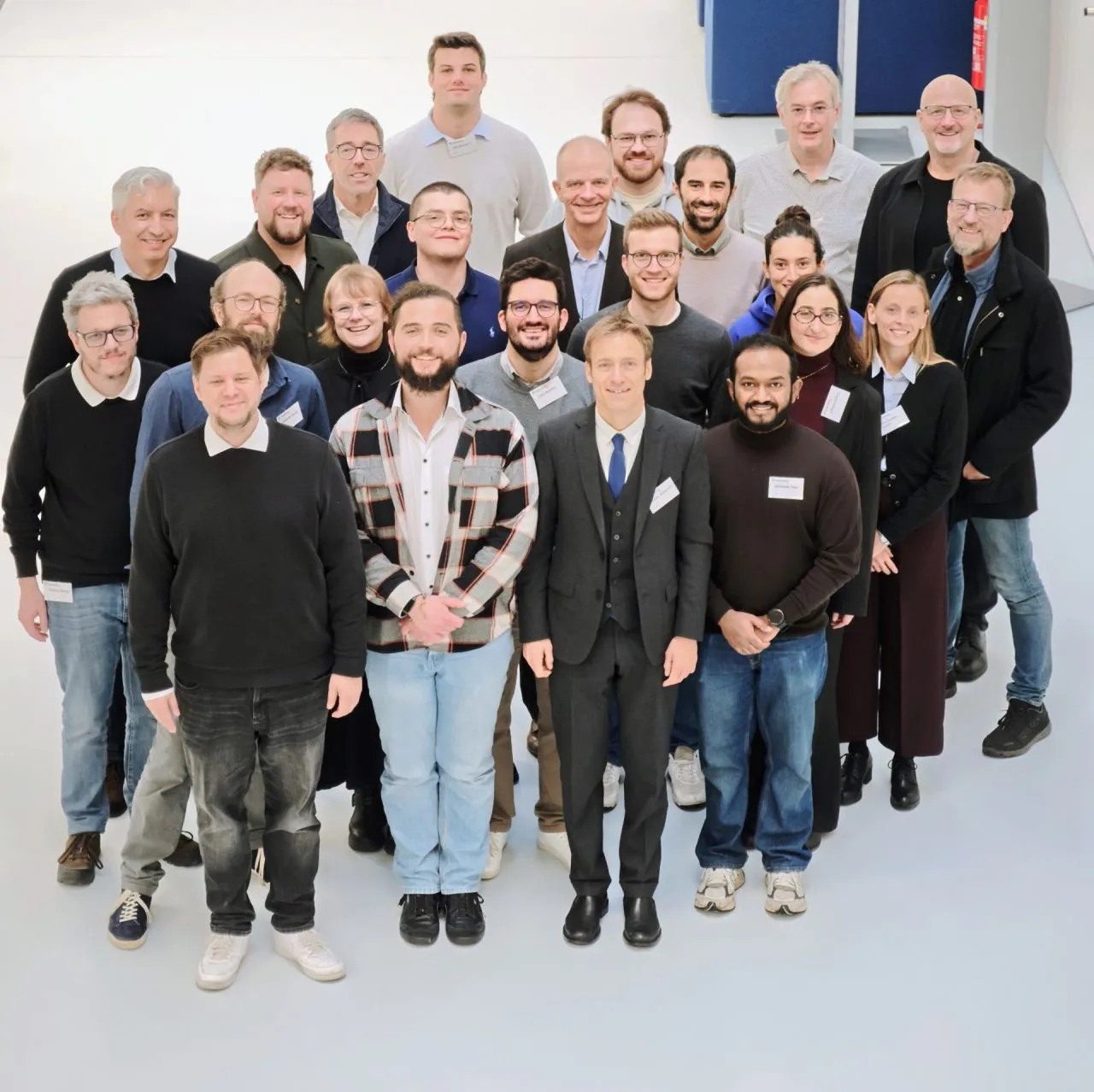
Participants at the RemaNet M35 General Meeting at Fraunhofer IPA, Stuttgart (9–11 November 2026).